The defense of Saudi Arabia is vital for the defense of the United States.
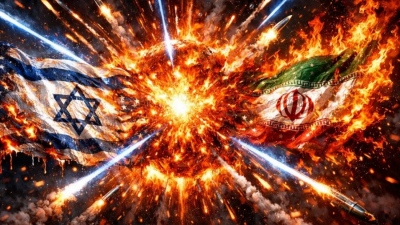
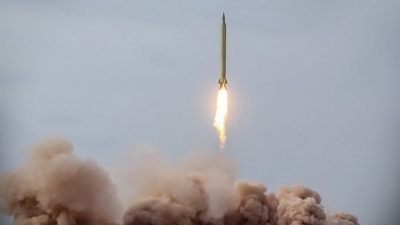
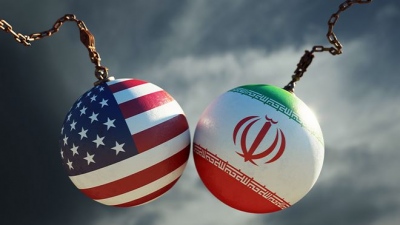
The statement of President Franklin D. Roosevelt in 1943, which other Persian Gulf states such as Qatar and the United Arab Emirates began to consider equally relevant for themselves, now appears different, given that all three states have now endured weeks of attacks with Iranian drones and missiles in retaliation for strikes by the United States and Israel.
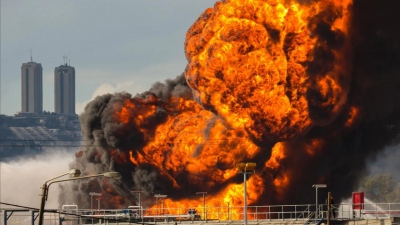
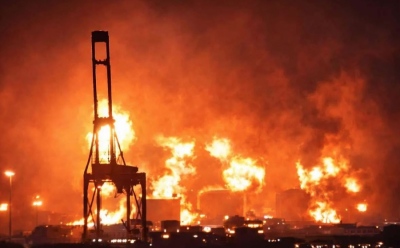
As Iran conveyed to them, the security shield from the United States proved porous and the war that is raging uncontrollably appears to carry a particular cost for oil-producing states as Iran cleverly struck their energy infrastructure.
In some cases, and while the conflict is still in an uncertain escalation, it will take a long time and significant capital to restore previous production capacity.
The traditionally warm relations between Washington and the Crown Prince of Saudi Arabia Mohammed bin Salman, the President of the United Arab Emirates Sheikh Mohamed bin Zayed Al Nahyan and the Emir of Qatar Sheikh Tamim bin Hamad al-Thani make it unlikely that these leaders will publicly express any dissatisfaction they may feel.
However, there are various economic ways to send a message.

How the message will be sent
Concern in the Gulf is real.
The billionaire businessman from Dubai Khalaf al-Habtoor questioned whether the cost of the Gulf’s involvement in the conflict was ignored. Sources close to government circles of the Arab Gulf states told Reuters that many believe that the President of the United States Donald Trump dragged the Gulf into a war that was largely shaped by Israel and agree that the political and economic consequences for allies were not fully assessed.
This dissatisfaction is not surprising.
Economic relations with Trump
Saudi Arabia, Qatar and the United Arab Emirates have invested heavily, in real money, in public displays of support for Trump that go far beyond the usual.
Before the president’s visit to the region last May, Qatar gifted Trump a luxury Boeing 747 aircraft, while entities linked to a member of the royal family of Abu Dhabi acquired a stake in World Liberty Financial, the stablecoin business of the Trump family. At the same time, the three Gulf states collectively contributed 24 billion dollars to the ultimately successful bid for Warner Bros. Discovery by Paramount Skydance, which is supported by the Ellison family, which is close to Trump.
As a result, when some Persian Gulf states advised the President of the United States not to strike Iran, they had reasons at least to hope that he would listen to them.
Instead, they must now face a war of uncertain duration and a blocked Strait of Hormuz, which means they cannot export their key fossil fuels.
In addition, according to Adnan Mazarei, senior fellow at the Peterson Institute for International Economics, they face rising defense spending, reconstruction costs and declining inflows of foreign direct investment, while borrowing costs are increasing.

They threaten to withdraw investments
This is likely why governments in the region are examining their options.
Senior representatives from three of the four largest Persian Gulf states are reassessing how they allocate globally the trillions of dollars of their sovereign investment funds, Reuters reported, citing a Gulf official. The main reason is to offset potential losses from the war.
But this reassessment could also be used as a way to express dissatisfaction toward Washington.
On the surface, an obvious way to do so would be withdrawing from the acquisition of Paramount or even reversing the decision of the Saudi PIF to invest 30 billion dollars in equity for the 55 billion dollar acquisition of Electronic Arts.
Neither promises good returns and such a move would constitute a clear blow.
Unfortunately, as Elon Musk discovered when buying Twitter, it is extremely difficult legally to withdraw from an almost completed agreement.
The deals that have been made
There remains, however, room for significant reassessment of the investment commitments made during Trump’s visit to the Gulf in 2025, which ultimately led Qatar to commit 1.2 trillion dollars in the United States, Saudi Arabia 1 trillion and the United Arab Emirates 1.4 trillion. These are long-term commitments lasting about a decade and only a small portion was accompanied by specific contracts at the time. The possibility of a “bubble” in artificial intelligence could suggest that the Abu Dhabi investment vehicle MGX should sell its stakes in OpenAI and in the Stargate initiative backed by Trump for the development of AI infrastructure.
However, as the emirate focuses heavily on establishing itself as an artificial intelligence hub, and still depends on chips from Nvidia, such a move might harm the United Arab Emirates more than the United States.
There are also other less obvious ways to send a message to Washington.
Among last May’s commitments, investments that appear less strategically significant include the 4 billion dollar agreement of the Saudi SURJ Sports Investment in the United States and support for American LNG.
Saudi Arabia’s effort to localize 50% of defense spending by 2030 is accelerating, among other things through partnerships outside the United States with Chinese and Turkish drone manufacturers.
Riyadh could reinforce this message by making more defense agreements in Europe.
Gulf leaders may consider it preferable not to abandon even these commitments.
However, as regime change in Iran appears unlikely, they may find themselves trapped in a more dangerous situation where they cannot rely on Washington.
It would be strange if this did not also have economic, beyond political, consequences.

Three Gulf states are reassessing how they allocate the trillions of dollars of their sovereign wealth funds, aiming to offset losses caused by the war of the United States and Israel against Iran, a Gulf official told Reuters on 19 March.
These reassessments include potential reversals of investment commitments, divestments and reevaluation of international sponsorship agreements, as oil and gas rich states evaluate how they will absorb the economic shock, according to the same official.
www.bankingnews.gr



Σχόλια αναγνωστών